26. November 2026
An Orchestra of One’s Own
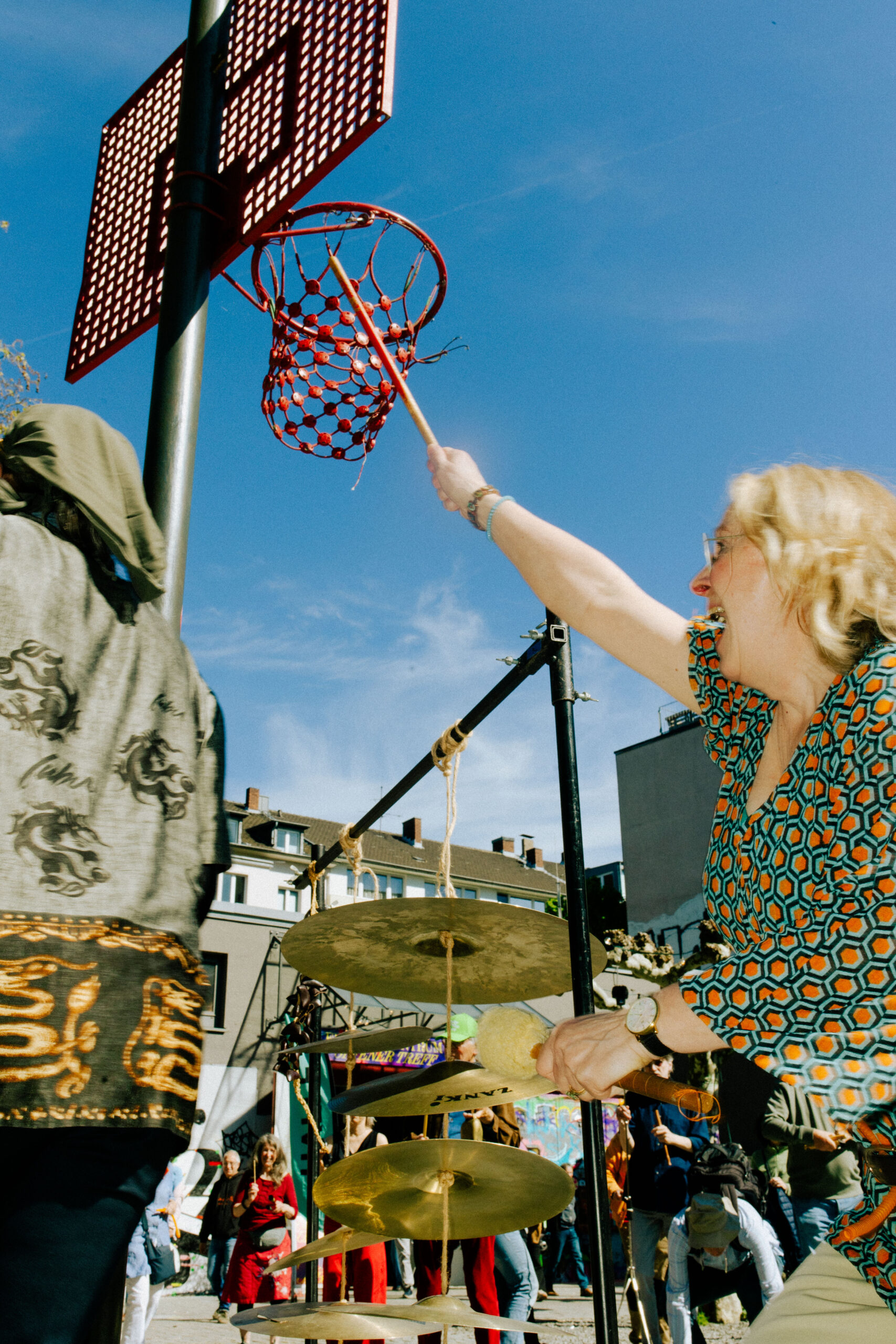
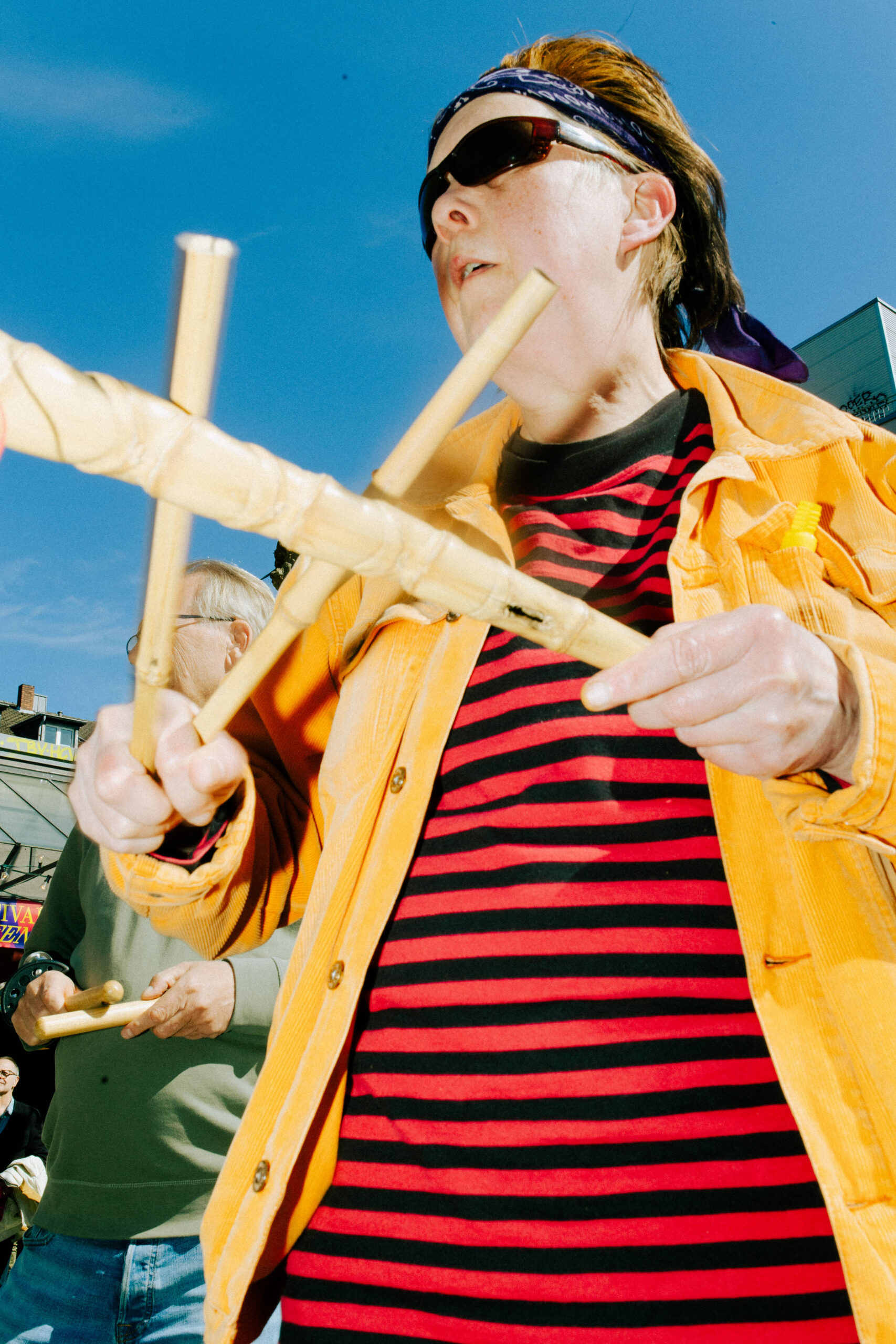
On that day, moving through Cologne’s green belt in the midst of the acoustic procession of the Kölner Chaos Orchester, he called out to us as he ran past: “Thank you for this moment!” A wiry man in his midforties was doing his early-summer laps and seemed genuinely pleased by this startling flood of sound. Setting aside everyday listening habits in this way is one thing; actively venturing into unknown territory within an art form yourself is quite another.
For many independent ensembles and contemporary orchestras, such artistic approaches—experimentation and the possibility of failure—are increasingly coming to the fore, as is the critique of hierarchical structures and inherited forms. The wish for new repertoire and for exchange within a collective is an important impulse for contemporary ways of organizing, as is the willingness to expand the ensemble through the participation of those whose sound is a little off‑kilter.
Yet the idea of the lay and amateur symphony orchestra as an instrument of social connection and collective education is anything but new—one need only think of the great tradition of workers’ and miners’ bands. What fell by the wayside in the late twentieth century, however, was the inclusion of this amateur practice in the world of contemporary music. This is where a new impulse now begins: it is a search for fitting words and appropriate labels to describe where the trail should lead once inclusive concepts appear—an orchestra of enthusiasts, a lay symphony orchestra, an ambitious amateur orchestra, a citizens’ orchestra, a barrier-free neighborhood orchestra, an audience orchestra. The strands of thought grow longer and twist themselves into a skipping rope spanned between professional and non-professional musical practice. Or should we speak of craft? A glance at music history shows how much our current categories miss the heart of the matter: around 1900, people still distinguished between “natural” and “art” voices—the neat division into “amateur” and “professional” is a modern invention.
Why should amateurs reproduce something that, in the context of their own lives, feels wrong or “fake,” when their experience in real time looks quite different? In retrospect, some amateur orchestras grew out of genuine necessity: they made it possible to raise one’s voice in the “Steigerlied” as a sign of pride and, as former miners would say, to show solidarity not only underground. That our listening to the world has become more sensitive is evidenced by new, multi-voiced art forms for which no handbook yet exists. As our living environments change and with what still lies ahead of us, our relationship to noise, sound, and their origins shifts, as does our sense of time. This clamor is the rumbling of many paths, a contemporary polyphony— just as much as Armenian chamber music or the songs of whales. Atonality and musique concrète were only a beginning. To expand their spectrum of sound, people build new instruments or manipulate existing ones, sonify the quietest corners and entities of this world, create spaces for what remains unspoken, and liberate sounds from the archives of music ethnology to make them live in the here and now. In deciphering these complex states and cultural entanglements, a need for creative input may well arise; at the same time, music-makers want, in community with others, to integrate those places to which their curiosity leads them. But how to proceed? Everything points towards coming closer through improvisation, through immediate playing together, through participation by listening—including the willingness to let silence be. With the founding of the KÖLNER CHAOS ORCHESTER in 2025 and the open invitation to join in, this is exactly what is at stake— and not simply a matter of “being allowed to play along.” To assume that no musical knowledge is needed would be a misunderstanding, at least if one equates knowledge solely with the academic. The kind of knowledge about how we experience sound that truly matters is nourished by many different sources—by experiences that are bound to neither a canon nor to anything you can look up in textbooks. However flawed the application of this knowledge may sound to some ears, autodidactic methods and dilettantism have always been important impulses in the arts and have supplied abundant inspiration for established professionals. For the members of the Kölner Chaos Orchester, the circumstances already described are good reasons to engage in this grassroots-democratic structure. To be able to contribute artistically on an equal footing here is something some participants have missed elsewhere. Many were previously underchallenged in other orchestras; others now see their opportunity in the unorthodox handling of traditional instruments. And then there are those who, in an emancipatory act of liberation, finally acquire their first instrument—after decades of doubt, because at school they were once certified as “without talent.”
Discovering one’s own voice in artistic free spaces in this way is like being given a gift. In reference to Virginia Woolf’s famous essay, the Kölner Chaos Orchester has created such a space: a “Room of One’s Own”—which here, however, is not a solitary room, but a many-voiced, protective space for all.
Text by Waltraud Blischke
© Sophia Hegewald
© Sophia Hegewald