2. September 2026
Studio Musikfabrik in Thailand
On Saturday 15 August 2026, Alexander Kronbichler, an oboist, and Mia Köseoglu, a violist from Studio Musikfabrik, set off on their journey to Thailand for the 2026 International Symposium of the Princess Galyani Vadhana Institute of Music (PGVIM).
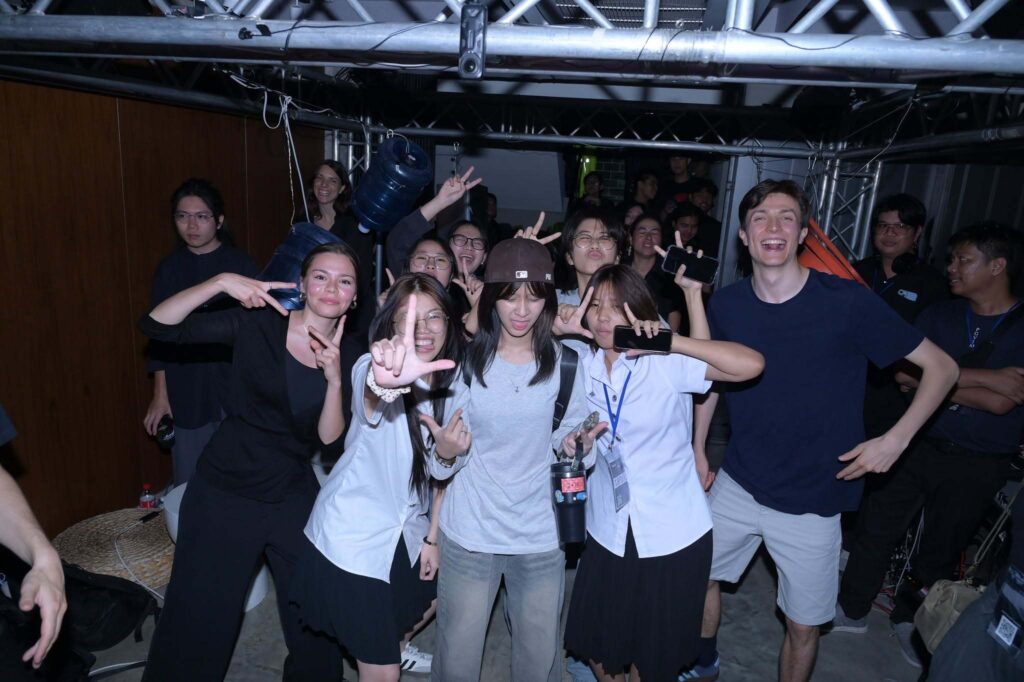 Accompanied by musicians from the Lübeck University of Music, the young adults arrived in the metropolis of Bangkok on Sunday lunchtime, where they were met by staff from the PGVIM. A week full of adventure lay ahead of them: an exciting, vibrant city; fragrant Thai food on every corner; a large institute campus; plenty of input and inspiration from the symposium; new encounters and, of course, new works – some involving improvisation – which were presented in two concerts.
“The biggest challenge for me was actually the first two and a half days: at first, Bangkok overwhelmed me as a huge, bustling and chaotic city, and I needed a bit of time to settle in. Once I’d got used to it, I was able to enjoy the city and the whole project to the full and simply have a wonderful time.” (Mia)
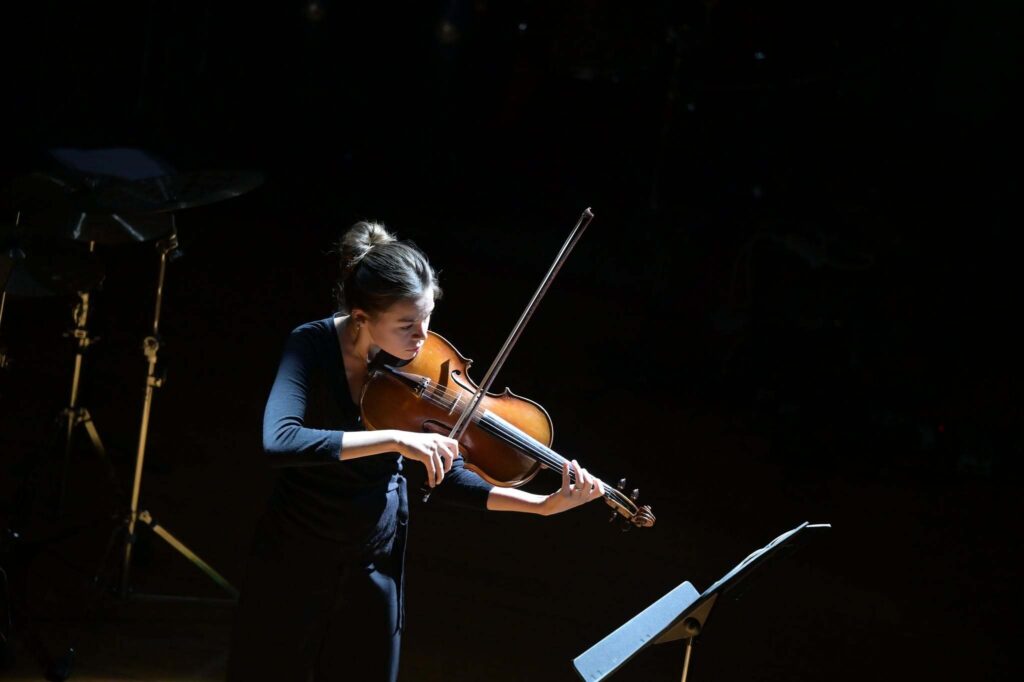
Before the symposium began, the musicians rehearsed their solo works, duets and tutti pieces, and worked with other musicians on the collaborative project *Rainforest* by David Tudor, in cooperation with Studio Musikfabrik, the Lübeck University of Music, the Bern University of the Arts, the China Conservatory of Music and the Princess Galyani Vadhana Institute of Music, under the artistic direction of Peter Veale. The piece *Rainforest*, which was originally commissioned for the Merce Cunningham Dance Company, evolved over several iterations from a dance accompaniment into a walk-through, performative spatial installation. The basic idea is based on the transformation of everyday objects into independent sound-producing instruments. Thus, on the evening of 20 August 2026, the Marshall Live House became a walk-in, immersive musical experience for the audience.
“Our concert at the Marshall Livehouse was one of the highlights of our trip for me. There, we were able to improvise freely to the Rainforest sound installation and thus discover entirely new soundscapes and playing techniques.” (Alexander)
“The ensemble playing and the direct interaction with the audience gave the whole thing a very special, unusual dynamic, which I thoroughly enjoyed.” (Mia)
The concert evening was rounded off with further works such as Wang Fei’s oboe solo “Drifting Dialogue I*, performed by Studio Musikfabrik under the direction of Peter Veale; “Shaking in the Garden” by Hermione Johnson for viola and oboe, performed by the two Studio Musikfabrik musicians; and Heinz Holliger’s oboe solo “Studie über Mehrklänge” (Study on Multitones). The individual works were positioned across different levels of the Marshall Live House, which gave the whole event the feel of a sonic journey and a walking concert.
“My personal highlight was definitely our concert at the Marshall House. The experience was completely different from what I’m used to at classical concerts.” (Mia)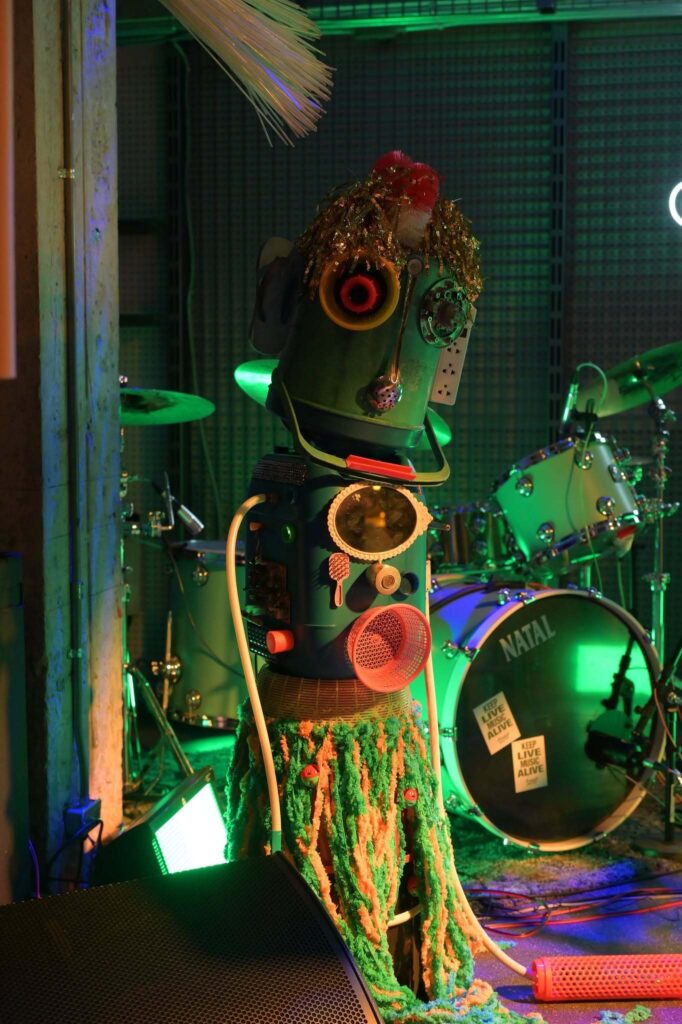
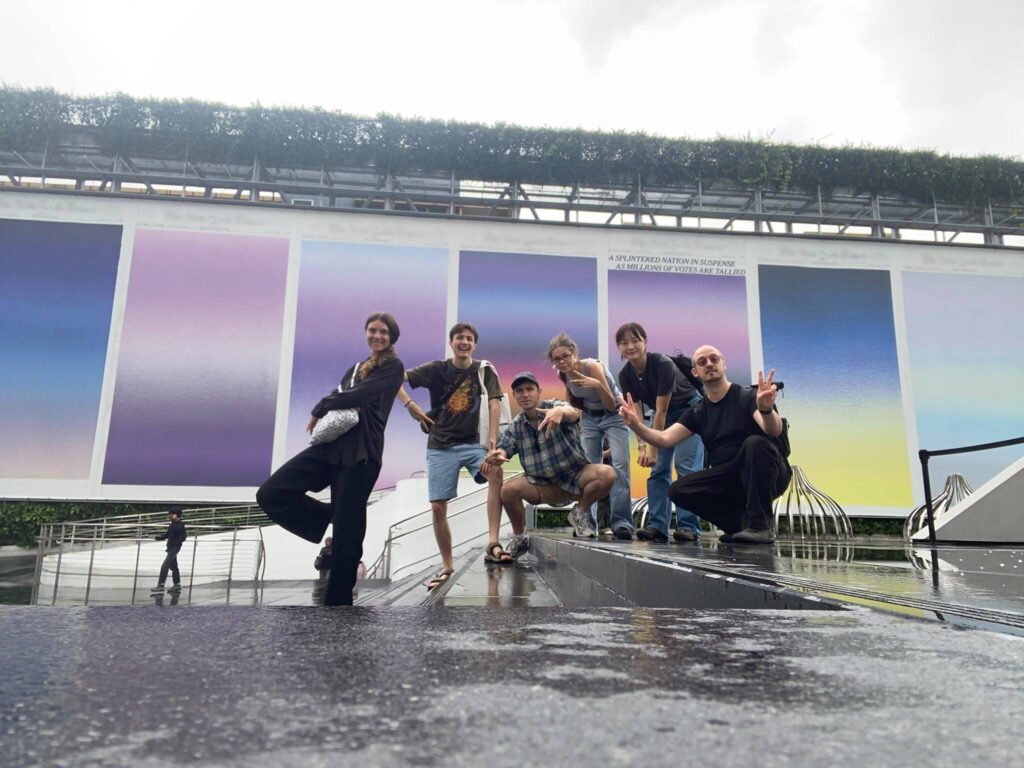 As well as its own concerts, the International Symposium also featured numerous lectures, panel discussions and concerts by other musicians specialising in electronic music, improvisation and contemporary music – all of which were even combined with traditional Thai instruments – as well as providing a space for exchange.
“What I found particularly valuable was the in-depth exchange with so many creative and inspiring people. I was able to make some wonderful new contacts and take home countless fresh impressions as well as renewed motivation for my own artistic work.” (Mia)
Another key moment was the concert on Friday evening, 21 August, at the Princess Galyani Vadhana Institute of Music. Together with students from the partner institutions, the programme featured Richard Barrett’s *Codex IV* and Xinlin Li’s *The sketch of white scene* for oboe, violin, cello, percussion and piano, composed for the 2026 symposium. The focus of the evening was György Kurtág, who was honoured in 2026 to mark the centenary of his birth. Kurtág’s music featured repeatedly throughout the programme – including in the solo works *Signs, Games and Messages* for solo oboe and viola, which were performed with great skill by Mia and Alexander.
“The concert at the PGVIM Institute was also a special experience, as, in addition to our solo pieces, we were able to perform together with students from Thailand.” (Alexander)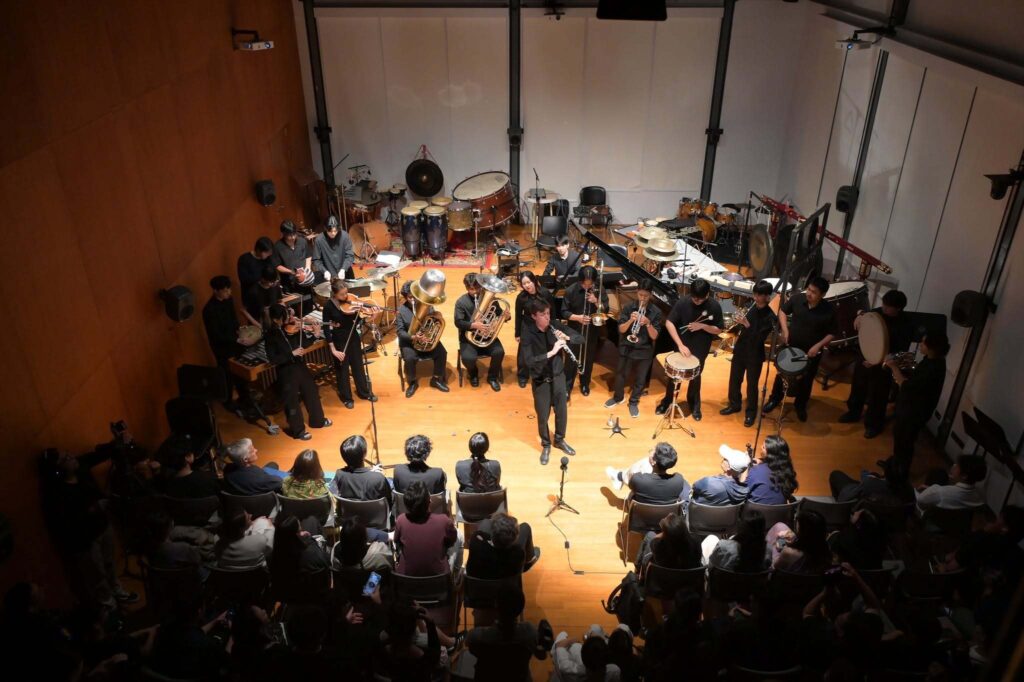
Following these eventful days leading up to and during the symposium, the musicians from Studio Musikfabrik and the students from the Lübeck and Bern conservatoires had two days off, which they spent exploring the local culture and cuisine, visiting museums and enjoying a traditional Thai massage to relax a little, before setting off on their return journey on 24 August.
“After the concerts, we had two days to explore Bangkok, and the memories we made there will stay with me for a long time to come. The various Buddhist temples were particularly special; with their intricately carved roofs and vibrant colours, they are truly impressive. Wat Pho, in particular, houses a 46-metre-long golden Buddha statue. We were also able to visit various museums of modern Thai art in Bangkok, went to some great bars and restaurants, and always had wonderful meals.” (Alexander)
In conclusion, it remains to be said:
“Our trip to Bangkok was a wonderful experience full of new discoveries. Not only did we get to know a new country with completely different customs and cultures, but we also gained lots of new musical experiences and met some brilliant people. (…) It was definitely one of the most exciting and inspiring trips I’ve ever been on, and I’ll be thinking back on it for a long time to come.” (Alexander)
“The trip to Bangkok was an absolutely enriching experience that I will remember for a long time to come.” (Mia)
Photos: © PGVIM